
Guide · Benin
Access to water in Benin, in figures
In Benin, most rural families get their water from boreholes, wells and village water networks. Access is improving fast, but not yet for everyone. Here is what the official figures say, and why a well changes daily life in a village.
In short
By the end of 2025, 84.3% of rural people in Benin were served by a drinking water point, according to the national rural water agency, which aims for universal access by 2030. WHO and UNICEF, who also count the time it takes to fetch water, estimate that about 4 rural people in 10 still lack a basic water service. Under most of the country, water lies in the rock: reaching it often takes a borehole.
Key figures
Benin's water in four figures
Figures from Benin's national rural drinking water agency (ANAEPMR), the British Geological Survey and WHO/UNICEF.
- 84.3%of rural people served by a drinking water point at the end of 2025, against 79.4% at the end of 2023
- 63%of rural people have at least a basic water service, 30 minutes or less there and back (WHO/UNICEF, 2024)
- 12,334boreholes fitted with a hand pump in rural Benin at the end of 2023
- 2030the year set by the State for universal access to drinking water in rural areas
Under the ground
Water stored in the rock
Most of Benin sits on basement rock: old granites and gneisses. Water is not found in an underground river, but in the weathered layer of this rock, which turns into a sandy material that holds water. On the plateaus, this layer is often 10 to 30 m thick.
According to the British Geological Survey, the water table there usually lies 5 to 15 m below the ground, and boreholes are 45 to 60 m deep. They give a small flow, often 0.25 to 0.5 litres per second, and are usually fitted with hand pumps: enough for a village, with no electricity.
In the south, the coastal basin holds several layers of sediments that supply most of southern Benin's water, with boreholes 10 to 100 m deep. In the north-east and north-west, other sedimentary basins call for boreholes of 30 to 100 m.
depending on the ground, in metres
- River and coastal sands5 to 20 m
- Coastal basin (south)10 to 100 m
- Northern basins30 to 100 m
- Basement rock (most of the country)45 to 60 m
Our charts, based on the British Geological Survey's Africa Groundwater Atlas (2018).
A goal for 2030
Real progress, not yet for everyone
Benin aims for universal access to drinking water in rural areas by 2030, in line with the Sustainable Development Goals. Its national rural water agency builds and rehabilitates village water networks and tracks the coverage rate every six months: from 76.7% at the end of 2022 to 84.3% at the end of 2025.
This rate counts the people who have access to an improved drinking water point. WHO and UNICEF use a stricter measure, which also counts the time needed to fetch water: by their estimate, about 63% of rural people had at least a basic service in 2024. Behind these averages, many villages still have no water point close to their homes.
% of the rural population, at 31 December
| Year | % of the rural population, at 31 December |
|---|---|
| 2022 | 76.7% |
| 2023 | 79.4% |
| 2024 | 82.1% |
| 2025 | 84.3% |
| 2030 (goal) | 100% |
Our chart, based on the reports of Benin's national rural drinking water agency (ANAEPMR). 2030: universal access goal.
- Village water network53%
- Borehole with a hand pump22%
- Autonomous water post4.4%
- Not yet served20.6%
Our chart, based on the ANAEPMR report for July to December 2023.
In the villages
What a well changes for a village
Nearly half of Benin's 14.5 million inhabitants live in the countryside (World Bank, 2024). Rain falls only part of the year: 1,000 to 1,100 mm on most of the country and close to 700 mm in the north, with the main rainy season from April to August.
The rest of the time, water has to come from underground. A well or a borehole close to homes saves long trips and gives families water every day, to drink, to cook and to make ablutions.
Our wells in Benin
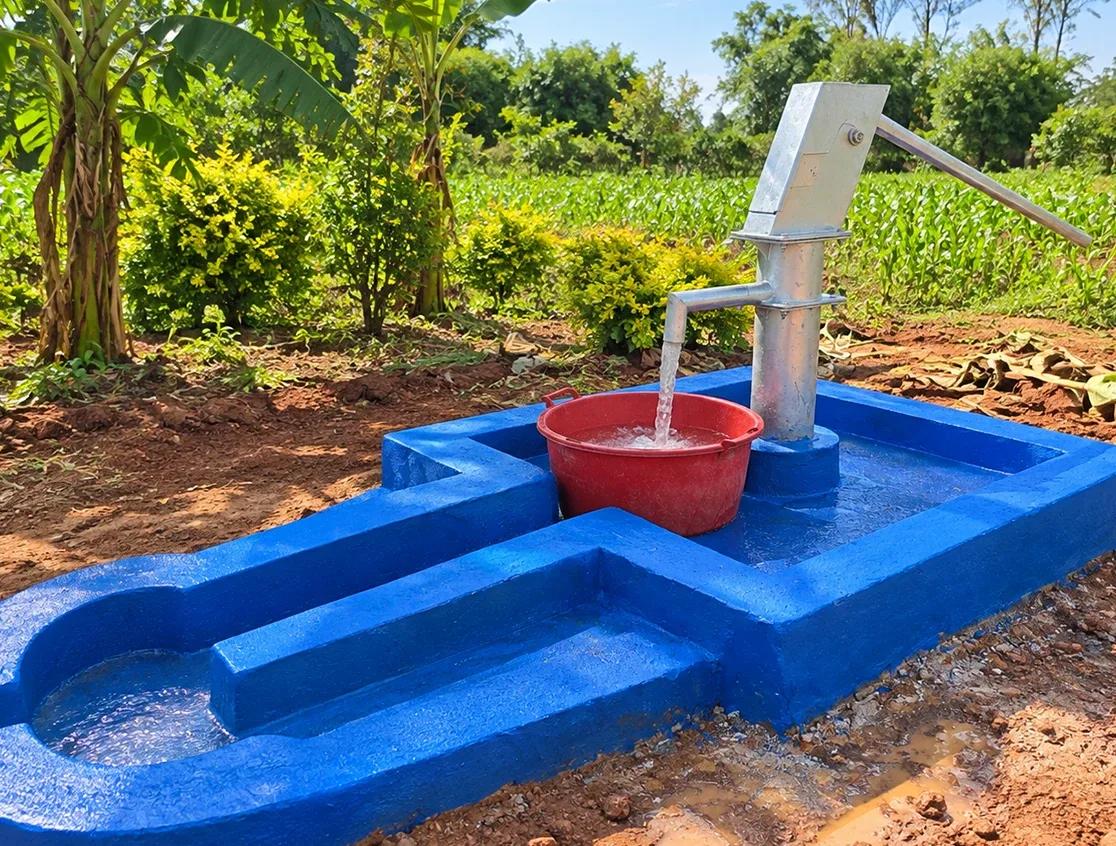
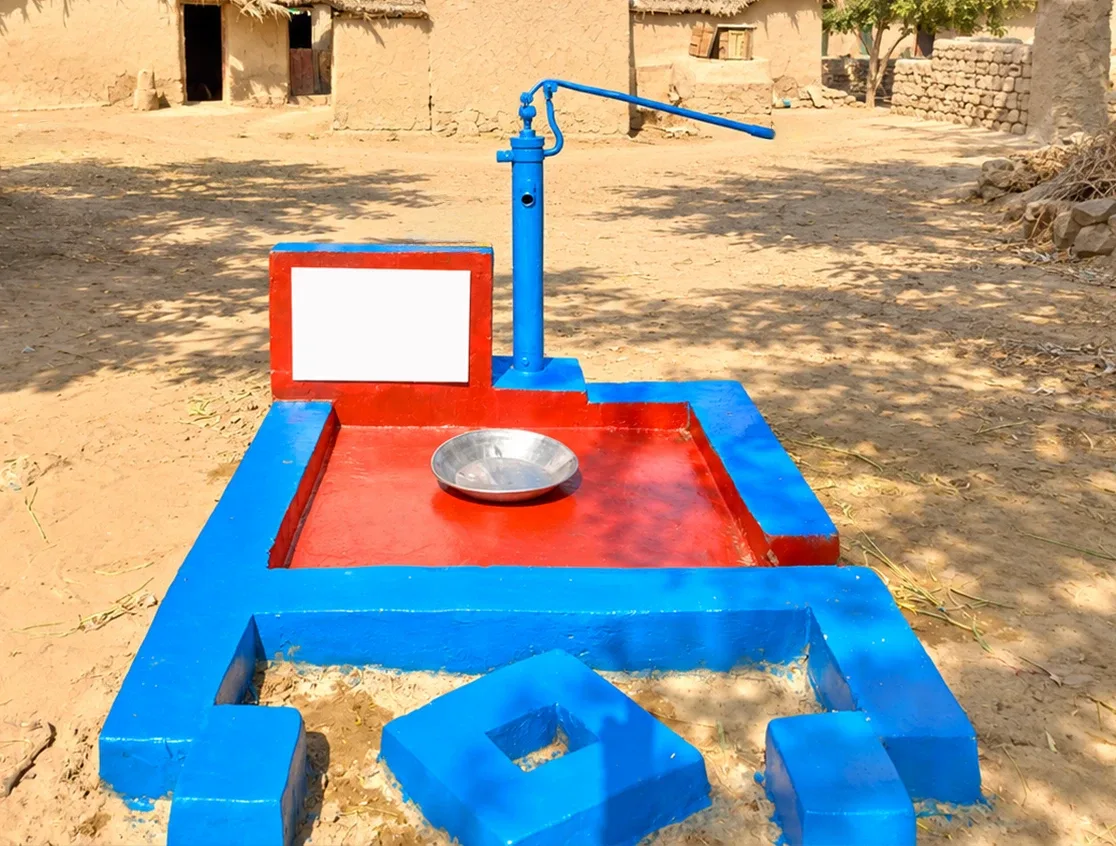
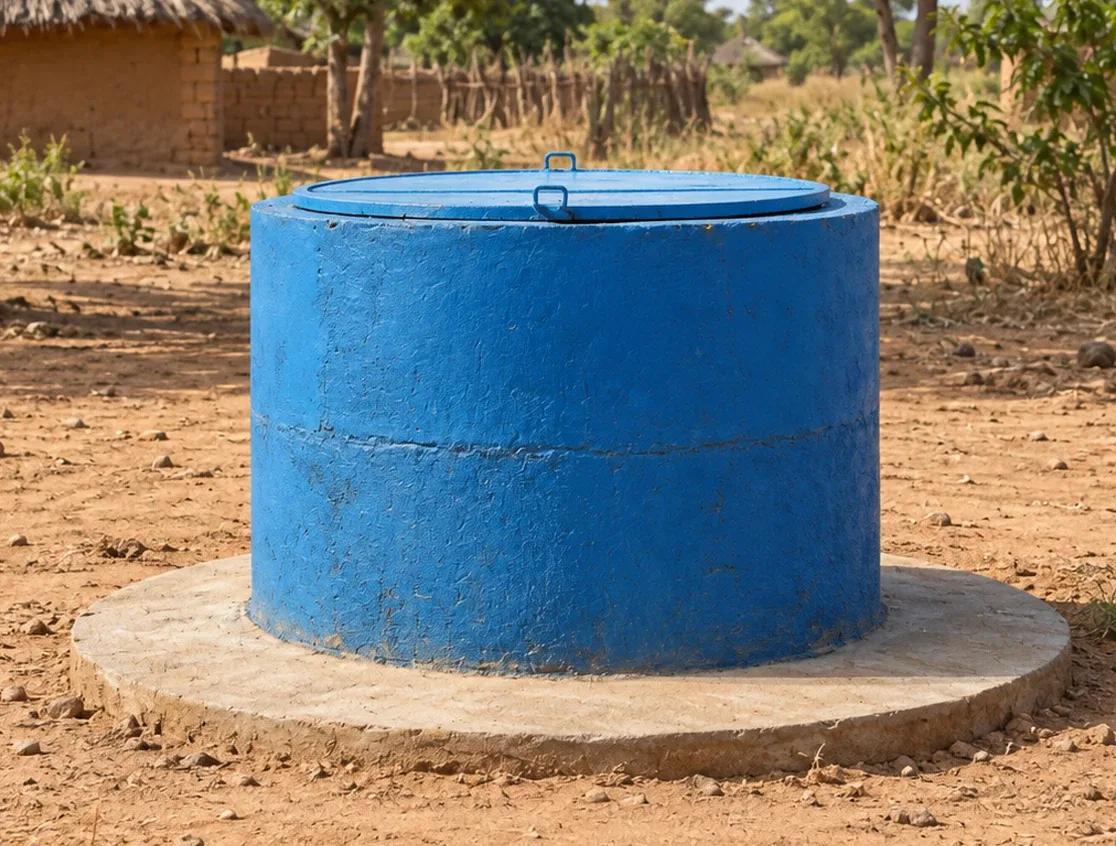
A classic well, a well with a crank winch or a 110 m borehole with a hand pump: our partner in Benin builds it, the sign carries the name of your choice, and you receive the photos and videos of the finished well.
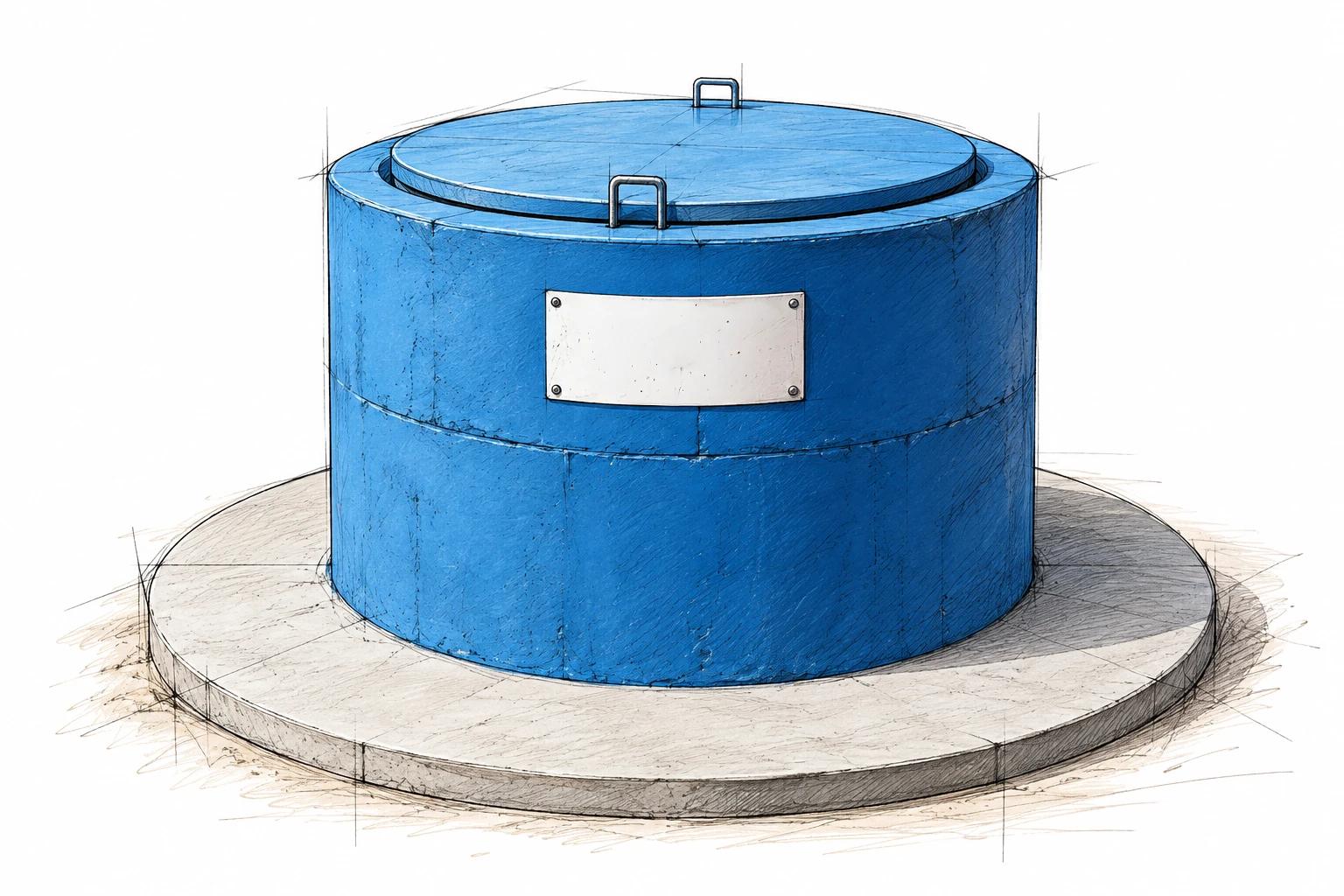 Classic wellA dug and lined well, from which water is drawn with a bucket. A traditional construction that brings water as close as possible to the inhabitants.BeneficiariesAbout 150 peopleDepth10 to 16 mBuild time3 to 6 weeksfrom$1,000See this well
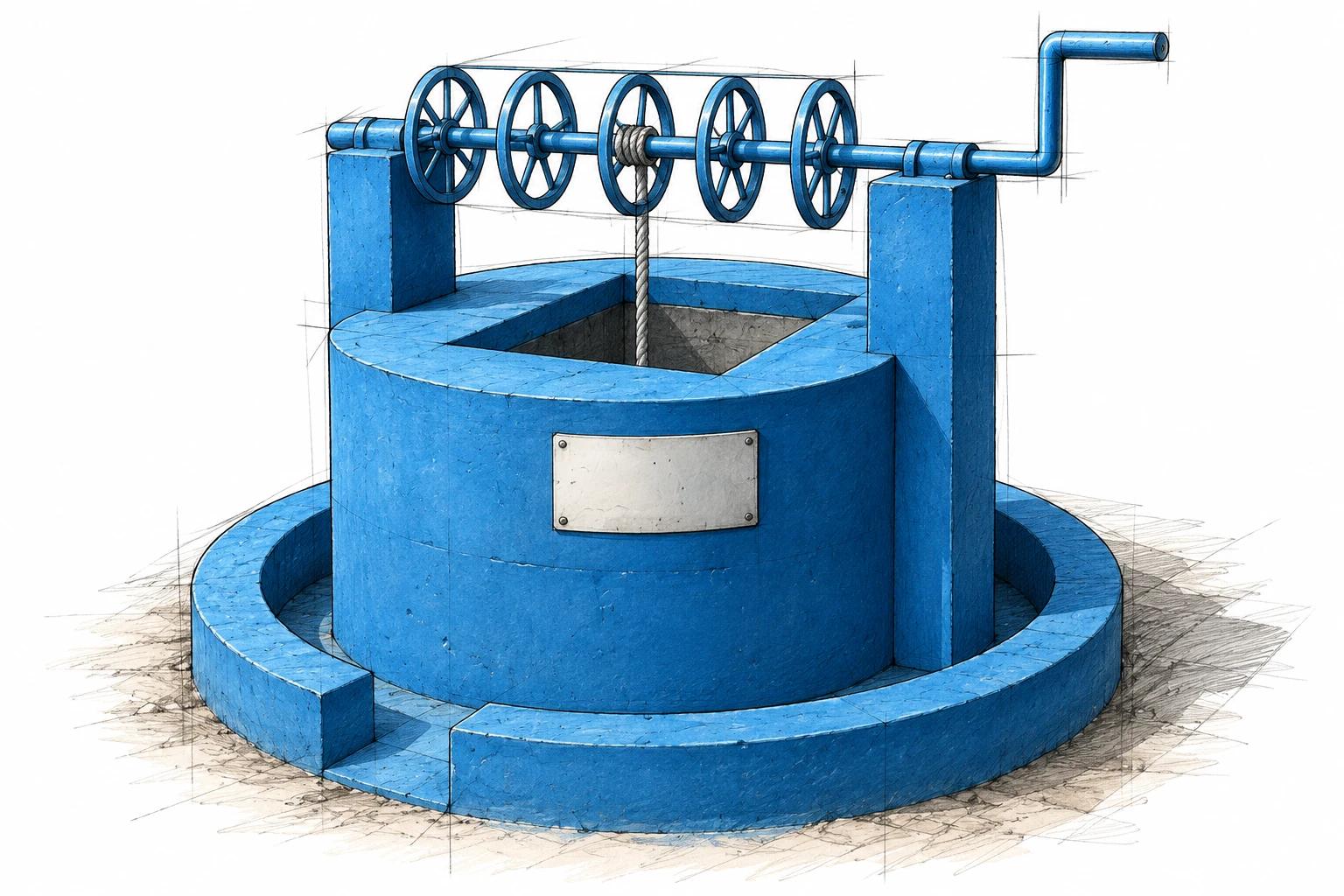
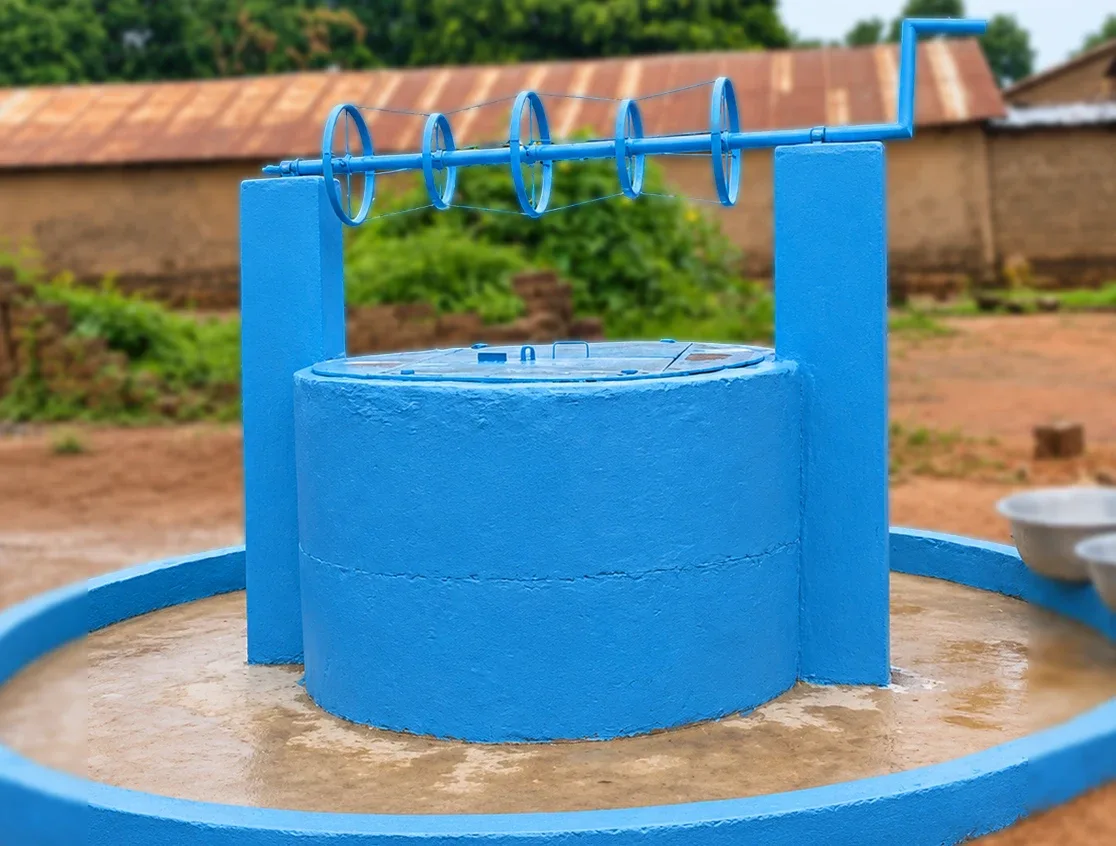 Classic well with a drawing systemA classic well fitted with a drawing system that makes raising the water easier, even for children and the elderly.BeneficiariesAbout 250 peopleDepth10 to 16 mBuild time3 to 6 weeksfrom$1,350See this well
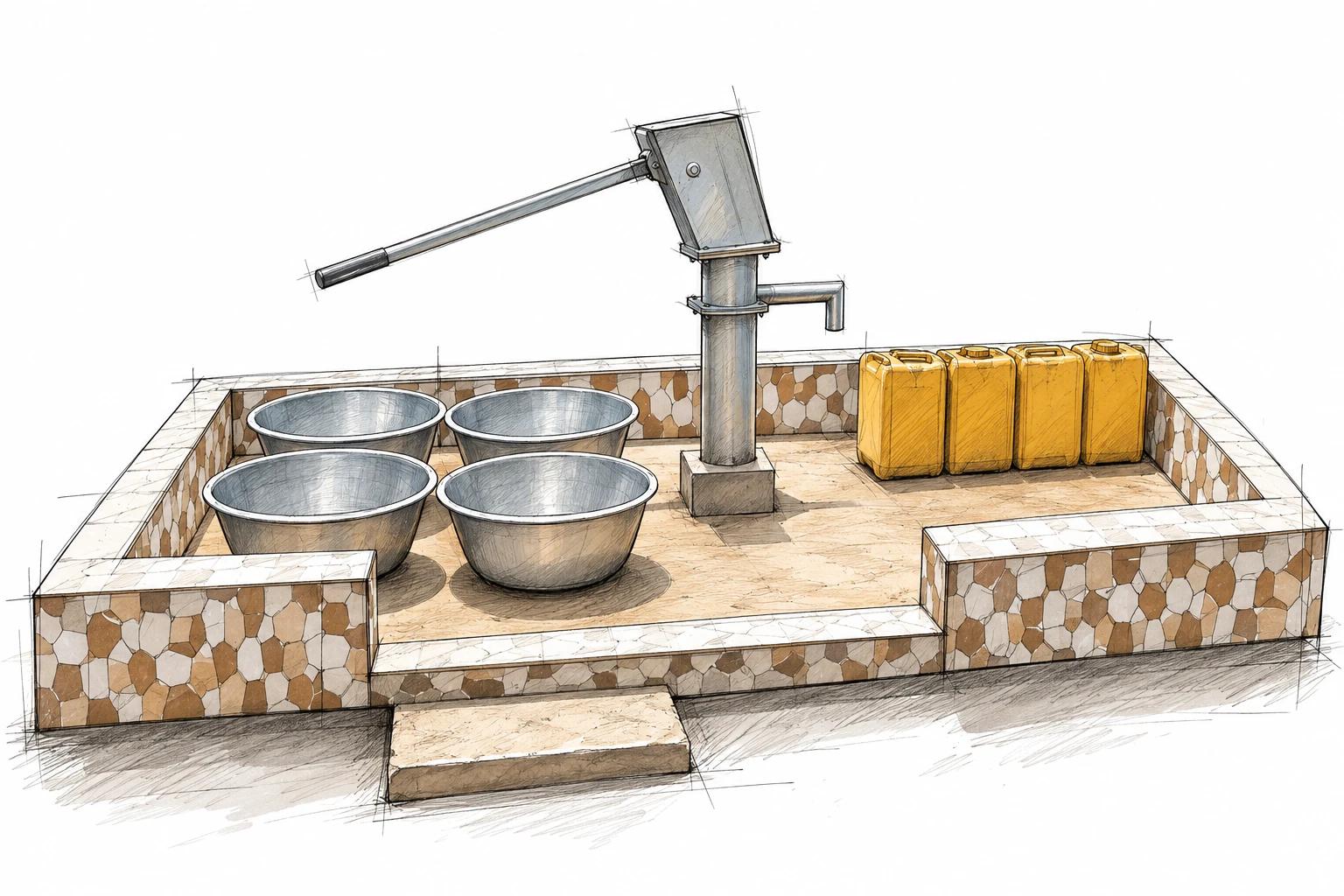
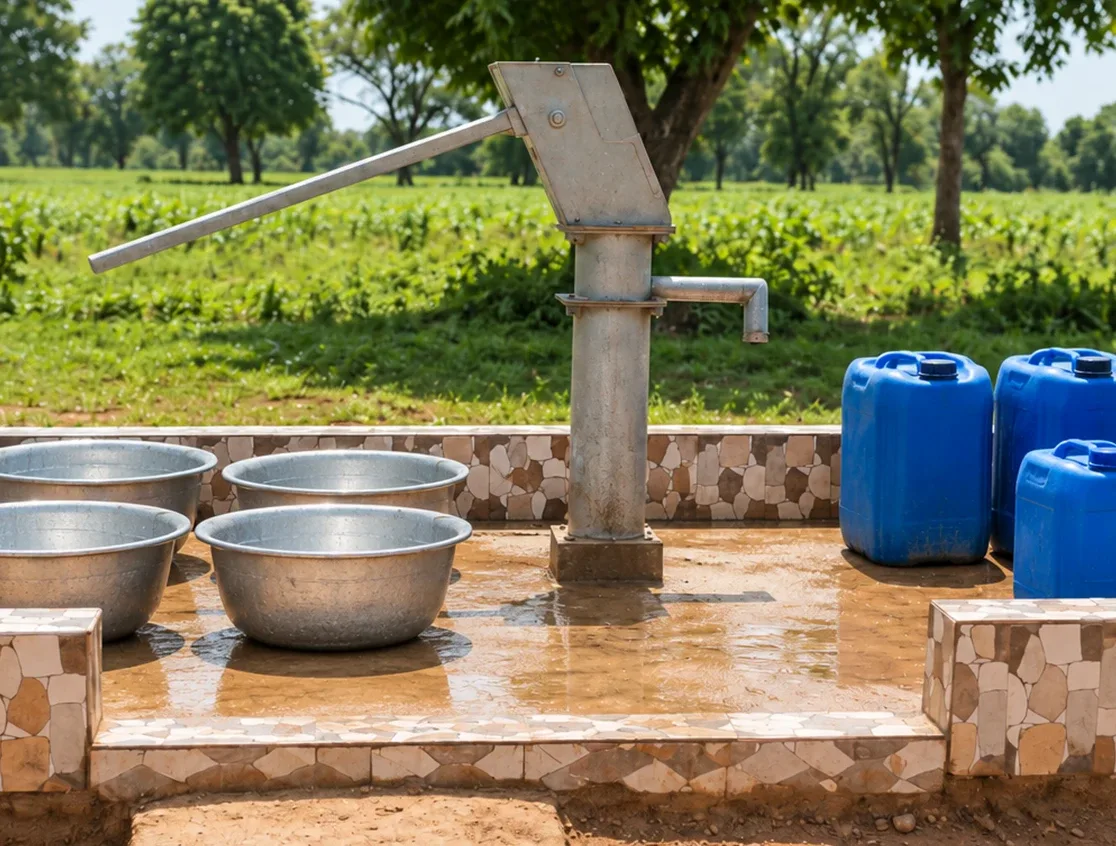 Hand pump borehole (110 m deep)A 110 m deep borehole fitted with a hand pump: it reaches a deep water table, for more abundant and better protected water where a classic well is not enough.BeneficiariesAbout 150 peopleDepth110 mBuild time3 to 6 weeksfrom$5,590See this well
Sources
- ANAEPMR (Benin's national rural drinking water agency), semi-annual monitoring report, July to December 2025
- ANAEPMR, semi-annual monitoring report, July to December 2023
- Boukari, M., Totin, H., Upton, K., Ó Dochartaigh, B. É. and Bellwood-Howard, I. (2018). Africa Groundwater Atlas: Hydrogeology of Benin. British Geological Survey.
- WHO/UNICEF Joint Monitoring Programme (JMP): people using at least basic drinking water services, rural Benin (World Bank data)
- World Bank: population of Benin and share living in rural areas (2024)
The figures come from these sources. The text and charts on this page are our own.
Questions
Water in Benin: your questions
A real person from our team will answer you, in English or French.
Do people in rural Benin have access to water?
More and more. According to Benin's national rural drinking water agency, 84.3% of rural people were served by a drinking water point at the end of 2025, against 76.7% at the end of 2022. The State aims for universal access by 2030.
Why do the figures on water access in Benin differ?
They do not measure the same thing. The national agency counts the people who have access to an improved water point. WHO and UNICEF also count the time needed to fetch water, 30 minutes or less for a round trip including queuing: by this measure, about 63% of rural people had at least a basic service in 2024.
How deep is groundwater in Benin?
It depends on the ground. In the basement rock that covers most of the country, the water table usually lies 5 to 15 m below the surface and boreholes are 45 to 60 m deep. In the coastal basin in the south, boreholes range from 10 to 100 m (British Geological Survey).
How does a well help a village in Benin?
It brings water close to homes: fewer long trips, and water every day to drink, cook and make ablutions. You choose the model and the name on the sign, and you receive the photos and videos of the finished well.
Your well in Benin
Bring water close to homes
Choose your well in Benin and the name on the sign. Our partner builds it, and you receive the photos and videos of the finished well.
Secure payment with Stripe, receipt sent by email